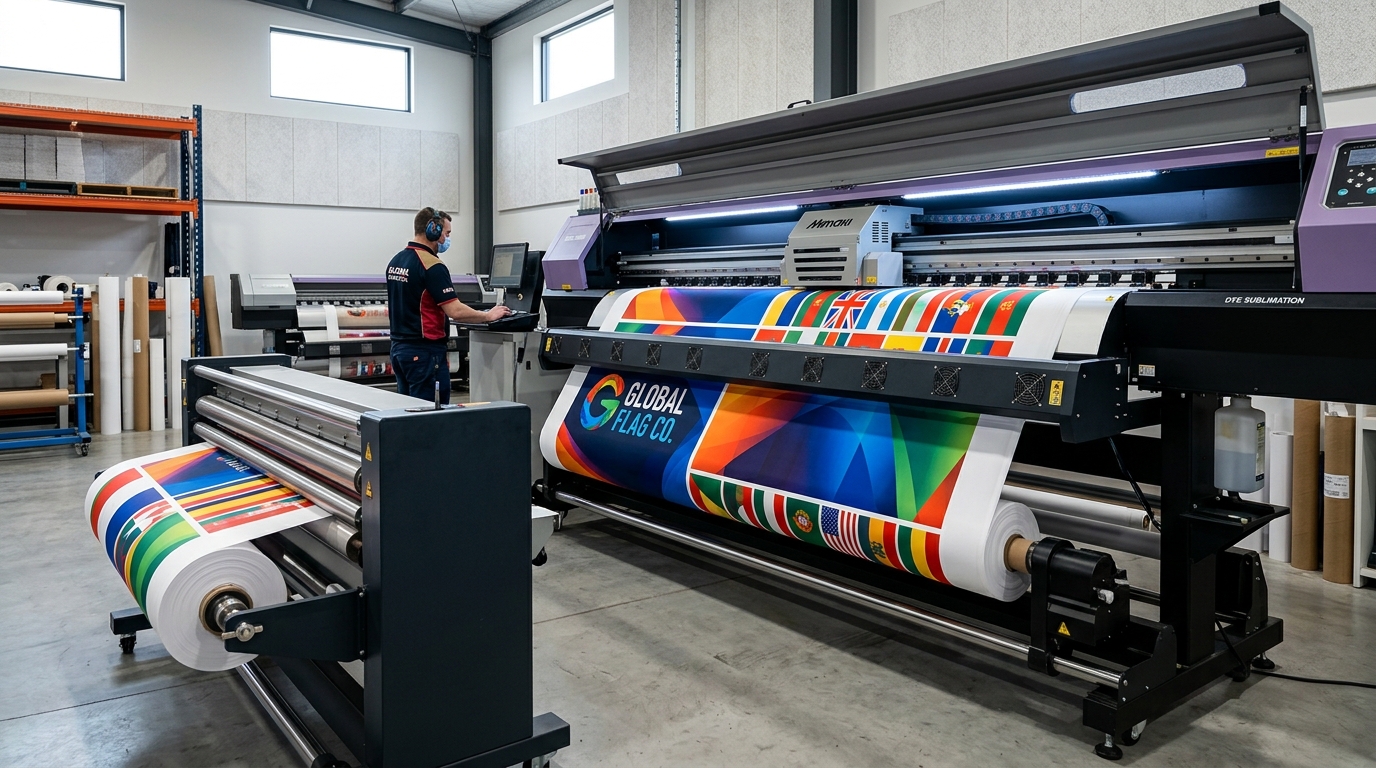
How to make a printed flag?
The Manufacturing Process
Creating a custom printed flag combines modern digital technology with traditional sewing craftsmanship. Here is how it's done in a commercial print shop.
1. Pre-Press & RIP Processing
Your digital design file is checked for color accuracy and resolution. It is then processed through RIP (Raster Image Processor) software, which translates the design into a language the industrial printer understands.
2. Digital Printing (Dye-Sublimation)
The design is printed onto a special roll of transfer paper using dispersed dyes. These are large, high-speed inkjet printers.
3. Heat Pressing (Sublimation)
The printed transfer paper is aligned with a roll of blank polyester flag fabric. Both are fed through a massive rotary calendar heat press running at roughly 400°F (200°C). The heat turns the ink into a gas, which permanently dyes the polyester fibers.
4. Cutting
The large roll of fabric is then cut into the individual flag shapes using a laser cutter or hot knife, which seals the edges of the polyester to prevent initial fraying.
5. Sewing and Finishing
Industrial seamstresses hem the edges (usually with double stitching), attach the heavy-duty canvas header, and install the brass grommets or pole sleeves. The flag is then inspected, folded, and shipped!